- New
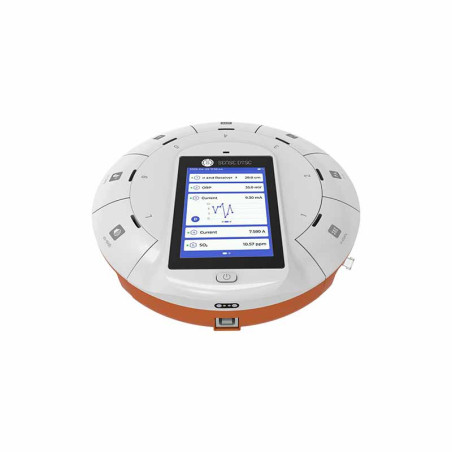


chemistry digital laboratory kit
 Privacy Policy
 Delivery policy
 Return policy
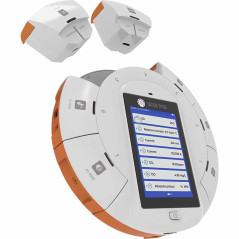
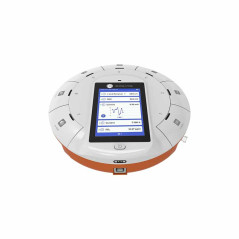
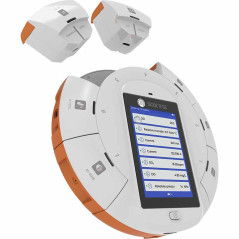
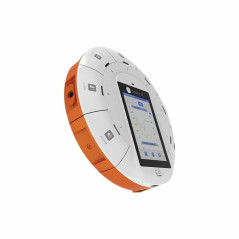
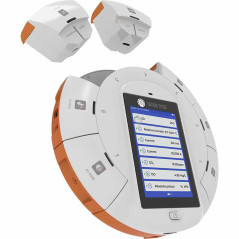
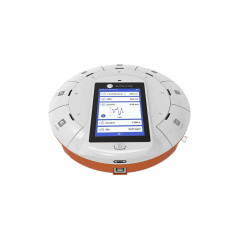
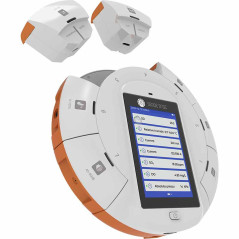
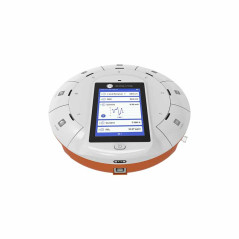
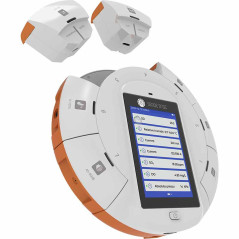
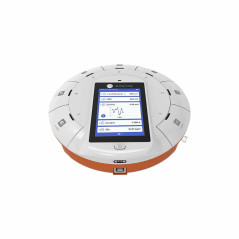
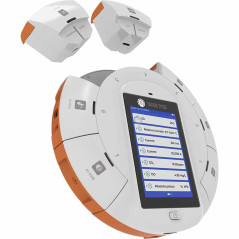
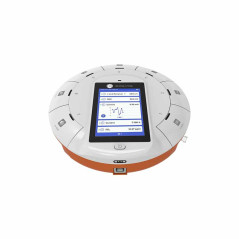
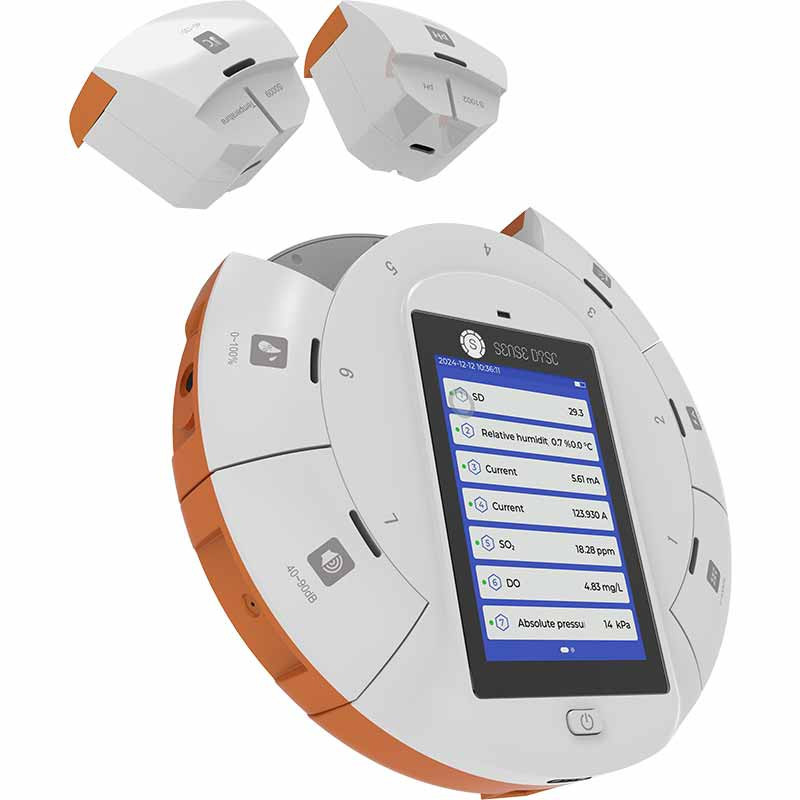
The complete SenseDisc Pro Digital Laboratory for CHEMISTRY with 31 sensors is an extensive and comprehensive solution for Chemistry laboratories in high schools, colleges, and universities.
It fundamentally transforms the way exact sciences are studied and researched with the help of this complete and complex digital chemistry lab kit.
Designed to meet the most demanding requirements in modern laboratories of high schools, universities, or research centers, this package provides an all-in-one solution for real-time data acquisition.
The SenseDisc Pro central unit integrates seamlessly with an extensive range of 31 specialized sensors, eliminating the barriers of traditional experiments.
From monitoring redox reactions and measuring oxidation-reduction potential (ORP), to analyzing ion concentrations (sodium, potassium, calcium, ammonium) and detecting hazardous gases or dissolved carbon dioxide, the kit ensures professional-level scientific accuracy.
By eliminating human analog reading errors and providing instant graphs on the interactive display or PC screen, teachers and students can directly visualize reaction kinetics, titration curves, and chemical parameter variations.
It is the ultimate tool for modern and high-performance practical education in the field of Chemistry.
Main Advantages - Digital Chemistry Lab Kit
High Scientific Accuracy in Electrochemistry: Allows exact measurements of oxidation-reduction potential (ORP), voltage, and current in electrochemical cells, providing a deep understanding of electron transfer and Nernst's laws.
Complete Monitoring of Ions in Solutions: Specific ion sensors (sodium, potassium, calcium, ammonium) make rapid quantitative analysis of chemical solutions and water samples possible without extremely laborious laboratory procedures.
Instant Visualization of Kinetics and Titrations: Eliminates the subjectivity of visual indicators; acid-base or redox titration curves are generated graphically in real time, precisely highlighting equivalence points.
Advanced Analysis of Chemical Reaction Gases: Detects and quantifies gas emissions in real time (such as dissolved carbon dioxide, carbon monoxide, hydrogen, methane, or ammonia), providing safety and concrete data in the study of reaction gases.
Autonomy and Flexibility in the Laboratory: The portable design of the SenseDisc Pro central unit allows both demonstrative lectures at the desk and individual practical work or field applications in environmental chemical analysis.
Technical Specifications - Digital Biology Lab Kit
1. SenseDisc Pro Base
Total Sensors Available in CHEMISTRY Kit: 31 sensors (4 integrated in the base + 8 external sensors + 19 sensors for the universal input)
Expansion Ports: 1 free universal input for additional sensors.
Sampling Accuracy: Up to 100,000 samples/second
Screen: 3.5 inch TFT Color Touchscreen (320x240 resolution)
Connectivity: Bluetooth, USB, Wi-Fi
Internal Storage: Integrated flash memory for over 100,000 records
Power Supply: Rechargeable Li-Po battery (operating autonomy > 8 hours)
Analysis Software: iLab (included, with user license)
OS Compatibility: Windows, macOS, iOS, Android, Linux
2. iLab Data Analysis Software Specifications
Display Modes: Line graph, analog indicator, digital, data table, GPS map
Analysis Functions: Curve fitting (linear, polynomial, exponential), derivation, integration, statistics
Real-Time Processing: Live sampling and graphic playback of data from all connected sensors
Data Export: CSV format, Excel, graphic image, laboratory project saving
Experiment Settings: Adjustment of sampling frequency, recording duration, and triggers
3. Integrated Sensors in SenseDisc Pro Base (4 Sensors)
Altimeter: Resolution 0.1 m
Applications: Measuring altitude in field experiments and relief analysis.
Barometer: Range 30-120 kPa, Accuracy 0.1 kPa (relative accuracy 0.006 kPa)
Applications: Monitoring atmospheric pressure and weather stages.
Triaxial Accelerometer: Range -8g to +8g | Resolution 0.016g | Accuracy ±2.5%
Applications: Study of 3D motion, vibrations, and gravity.
GPS Sensor: Position accuracy 2.5m CEP50, Speed accuracy 0.1m/s, Max. update rate 10Hz
Applications: Geolocating data collection points in environmental experiments.
4. External Sensor Package (8 Sensors + 19 Sensors for Universal Input)
1.Voltage Sensor
Usage: Measures voltage in an electrical circuit or device.
Measuring Range: -30V~30V | Accuracy: ±1% | Resolution: 0.02V | Resistance: 2MΩ
Experiments: Voltmetric measurement of bulb resistance, observation of capacitor charging and discharging experiments.
2.Millivolt Voltage Sensor
Usage: Measures the potential difference between two ends of an electrical device.
The millivolt voltage sensor circuit divides the collected voltage after processing, enabling the measurement of weak electromotive force in low-frequency and low-voltage DC or AC circuits.
High-precision measurement of small electrical potential differences in sensitive electronic circuits, electrochemistry experiments (electromotive force of galvanic cells), and thermocouples.
Measuring Range: -500~500mV
Accuracy: ±1%
Resolution: 0.3mV
Input Impedance: 500kΩ
3.Current Sensor
Usage: Measures current in a circuit.
Measuring Range: -30A ~ +30A | Accuracy: ±2% | Resolution: 0.02A
Usage: Measurement of electric current intensity in complex DC and AC circuits with high amperage values.
4.Thermocouple Sensor
Usage: Measurement of surface temperature, gases, acidic and alkaline liquids; can also be used for measuring ultra-low and high temperatures.
Measuring Range: -40°C to 135°C
Accuracy: ±0.6°C
Resolution: 0.1°C
Experiments: Heat absorption and dissipation for objects of different colors and liquids; water cooling models, mechanical work through friction, water boiling experiments, relationship between boiling point and pressure, Joule's law, heat of acid-base reactions, oxygen corrosion of iron, etc.
5.Voltage Sensor (High Range)
Usage: Measurement of electrical voltage in DC and AC circuits, suitable for physics experiments involving higher potential differences.
Measuring Range: -500V ~ +500V
Accuracy: ±2%
Resolution: 0.3V
6.ORP Sensor (Oxidation-Reduction Potential)
Usage: Used to measure the redox potential of a reducing solution (ORP).
The front part of the sensor is the ORP electrode, which absorbs and releases electrons on its sensitive layer (normally made of inert metal like platinum and gold).
Measuring Range: -2000mV ~ +2000mV
Accuracy: ±1%F.S
Resolution: 1 mV
7.Dissolved Carbon Dioxide Sensor
Usage: Used to detect CO2 concentration in solution.
Dissolved CO2 diffuses into the thin liquid layer between the pH electrode and the gas-permeable membrane.
The reaction occurs until the partial pressures of the sample and the thin liquid layer are equal. The pH change of the thin liquid layer is measured by a combined electrode following Nernst's formula.
Measuring Range: 0.2ppm ~ 440ppm | Resolution: 0.1ppm
Used for: Ecological water studies, measuring respiratory activity of aquatic organisms, or investigating chemical changes in liquid environments.
8.Ammonium Ion Sensor
Usage: Designed with an ion-selective electrode (membrane electrode) that measures ion activity and concentration in solution using membrane potential according to Nernst's formula.
The sensor circuit converts the potential into an analog signal.
Measuring Range: 0.9 ~ 1800ppm
Resolution: 0.1ppm
Free Universal Input
Allows the connection of any other additional external sensor from the range.
The 19 Universal Sensors That Can Be Connected Separately to the Free Universal Input
1.pH Sensor
Usage: Rapid and precise measurement of solution pH (garden soil, acid rain, acid-base titrations, neutralization).
Measuring Range: 0~14 pH | Accuracy: ±0.2 | Resolution: 0.01
2.Conductivity Sensor
Usage: Measurement of solution conductivity and its changes (drinking water, tap water, comparing aqueous solutions, investigating electrolytes).
Measuring Range: 0 ~ 20000 μS/cm | Accuracy: ±3%F.S | Resolution: 6μS/cm
3.Sulfur Dioxide Sensor (SO2)
Usage: Electrochemical working principle; generates electric potential and current when SO2 enters the electrode.
Measuring Range: 0 ~ 20ppm | Accuracy: ±1%F.S | Resolution: 0.1ppm
4.Nitrite Ion Sensor
Usage: Electrochemical sensor with an ion-selective membrane electrode following Nernst's formula.
Measuring Range: 4.6 ~ 4600ppm | Resolution: 0.5ppm
5.Alcohol Gas Sensor
Usage: Sensitive component made of metal oxide semiconductor on an aluminum oxide plate; conductivity increases with alcohol gas concentration.
6.Chlorine Gas Sensor (Cl2)
Usage: Electrochemical measurement of chlorine concentration through a selective gas-permeable membrane and redox reaction on the electrode.
7.Nitrate Ion Sensor
Usage: Electrochemical sensor measuring ion activity and concentration using membrane potential (Nernst formula).
Measuring Range: 0.6 ~ 6200ppm | Resolution: 0.4ppm
8.Chloride Ion Sensor
Usage: Electrochemical sensor measuring chloride ion activity and concentration in solution using membrane potential.
Measuring Range: 1.8 ~ 3550ppm | Resolution: 0.3ppm
9.Sodium Ion Sensor
Usage: Electrochemical sensor determining sodium ion concentration via a specific membrane electrode (Nernst formula).
Measuring Range: 0.2ppm ~ 2300ppm | Resolution: 0.2ppm
10.Potassium Ion Sensor
Usage: Measurement of potassium ion content in solution.
Measuring Range: 0.4ppm ~ 3900ppm | Resolution: 0.3ppm
11.Calcium Ion Sensor
Usage: Electrochemical sensor measuring calcium ion activity and concentration in solution.
Measuring Range: 0.4ppm ~ 4000ppm | Resolution: 0.7ppm
12.Carbon Monoxide Sensor (CO)
Usage: Constant potential electrolytic sensor; CO and O2 produce charge and form a current via redox reaction proportional to CO concentration.
Measuring Range: 0 ~ 1000ppm | Accuracy: ±1%F.S | Resolution: 1ppm
13.Hydrogen Sensor (H2)
Usage: Constant potential electrolytic sensor; current amplitude is directly proportional to hydrogen concentration.
Measuring Range: 0 ~ 1000ppm | Accuracy: ±1%F.S | Resolution: 1ppm
14.Ammonia Gas Sensor (NH3)
Usage: Electrochemical measurement of gas concentration using a selective gas-permeable membrane.
Measuring Range: 0 ~ 50ppm | Accuracy: ±1%F.S | Resolution: 0.1ppm
15.Ozone Sensor (O3 Sensor)
Usage: Electrochemical measurement of ozone gas concentration through a selective membrane.
Measuring Range: 0 ~ 20ppm | Accuracy: ±1%F.S | Resolution: 0.02ppm
16.Hydrogen Sulfide Sensor (H2S Sensor)
Usage: Electrochemical measurement of gas concentration via diffusion and redox reaction on the electrode.
Measuring Range: 0 ~ 100ppm | Accuracy: ±1%F.S | Resolution: 0.1ppm
17.Nitrogen Dioxide Sensor (NO2)
Usage: Electrochemical measurement of nitrogen dioxide gas concentration.
Measuring Range: 0 ~ 20ppm | Accuracy: ±1%F.S | Resolution: 0.1ppm
18.Methane Sensor
Usage: Catalytic combustion effect; the resistance of the sensing element increases when detecting combustible gas.
Measuring Range: 0 ~ 10000ppm | Accuracy: ±3%F.S | Resolution: 3ppm
19.Nitric Oxide Sensor (NO)
Usage: Measures nitric oxide content in a gas.
Measuring Range: 0 ~ 250ppm | Accuracy: ±1%F.S | Resolution: 0.1ppm
Usage Scenarios - Digital Biology Lab Kit
Study of Redox Reactions and Electrochemistry: Utilizing the ORP sensor (oxidation-reduction potential) together with voltage and current sensors to monitor galvanic cells and electrolysis processes in real time. This makes it possible to study electron transfers, electrochemical activities, and experimentally verify Nernst's laws in academic or research environments.
Volumetric Analyses and Advanced Titrations: Automatic tracking of rapid potential and temperature variations (using the thermocouple sensor) during acid-base or redox titrations. Subjective errors from classical visual indicators are eliminated to graphically generate titration curves and accurately identify the equivalence point directly on the touchscreen or PC.
Monitoring Specific Ions in Solutions: Rapid and precise determination of concentrations of various ion types present in liquid samples using dedicated sensors for sodium, potassium, calcium, and ammonium within applied analytical chemistry exercises, water quality control, and complex soil chemistry studies.
Analysis of Reaction Gases and Pollutants: Detection, measurement, and quantification in real time of hazardous gas emissions or dissolved carbon dioxide resulting from chemical reactions in the laboratory. The study of gases such as carbon monoxide, nitrogen dioxide, ammonia, hydrogen, methane, or ozone is conducted in complete safety for simulating industrial processes and environmental studies.
Content - Digital Biology Lab Kit
SenseDisc Pro Datalogger Console (with 4 integrated sensors: Altimeter, Barometer, Triaxial Accelerometer, GPS)
USB Data and Charging Cable
Power Adapter
Voltage Sensor
Millivolt Voltage Sensor
Current Sensor
Thermocouple Sensor
Voltage Sensor (High Range)
ORP Sensor (Oxidation-Reduction Potential)
Dissolved Carbon Dioxide Sensor
Ammonium Ion Sensor
Universal Input Module with: pH Sensor
Conductivity Sensor
Sulfur Dioxide Sensor (SO2)
Nitrite Ion Sensor
Alcohol Gas Sensor
Chlorine Gas Sensor (Cl2)
Nitrate Ion Sensor
Chloride Ion Sensor
Sodium Ion Sensor
Potassium Ion Sensor
Calcium Ion Sensor
Carbon Monoxide Sensor (CO)
Hydrogen Sensor (H2)
Ammonia Gas Sensor (NH3)
Ozone Sensor (O3 Sensor)
Hydrogen Sulfide Sensor (H2S Sensor)
Nitrogen Dioxide Sensor (Nitrogen Dioxide NO2)
Methane Sensor
Nitric Oxide Sensor (Nitric Oxide NO)
Specific References
No customer reviews for the moment.
chemistry digital laboratory kit