- New
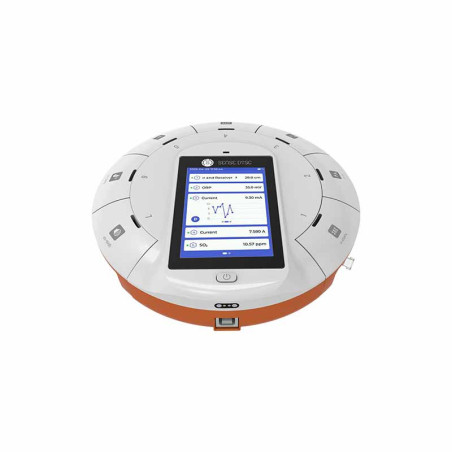


Ecology digital laboratory kit
 Privacy Policy
 Delivery policy
 Return policy
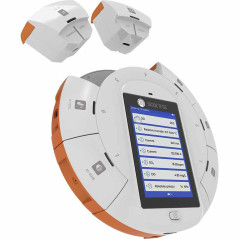
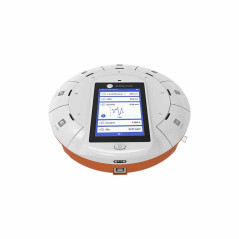
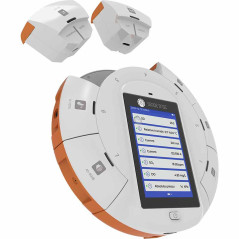
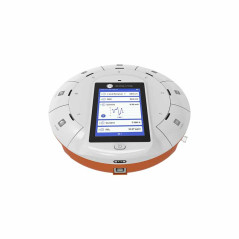
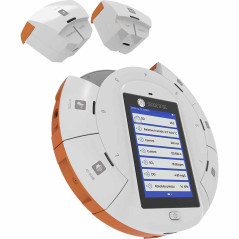
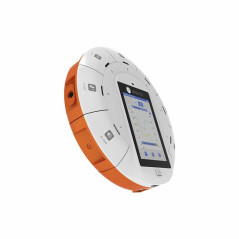
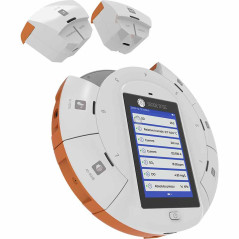
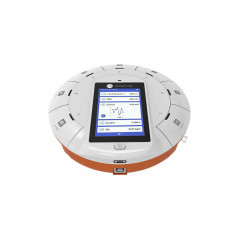
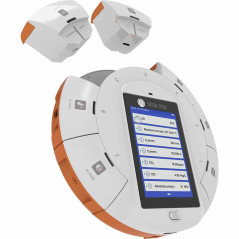
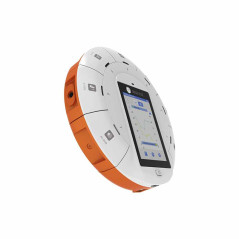
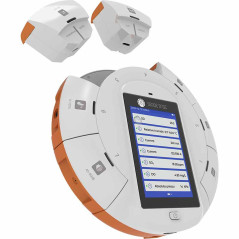
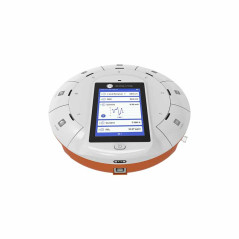
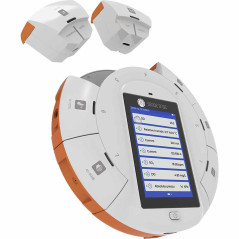
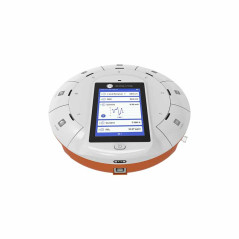
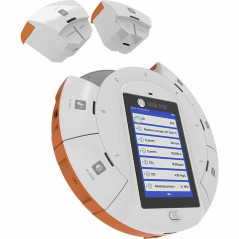
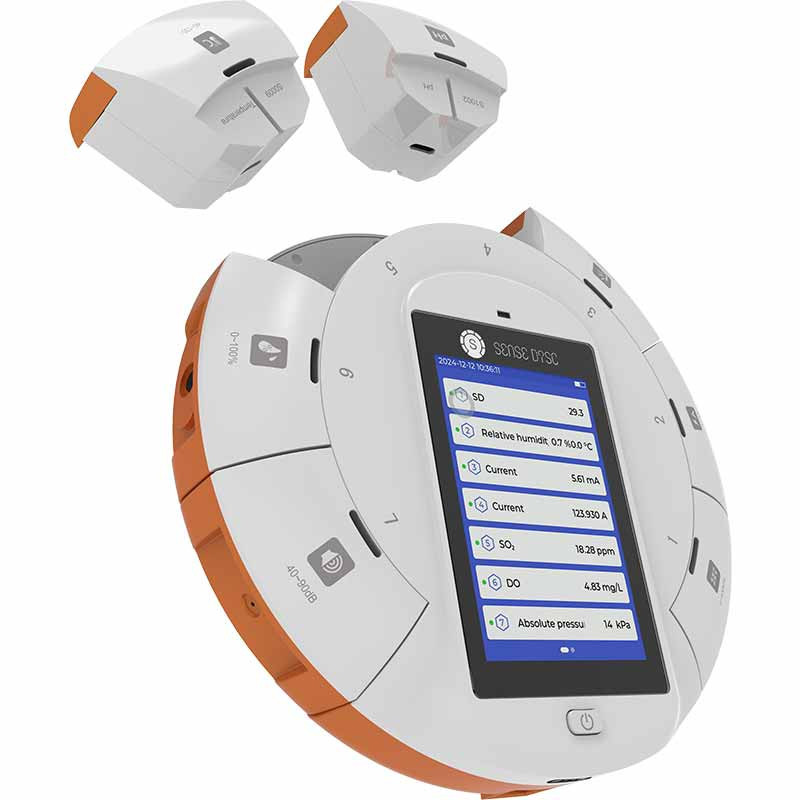
SenseDisc Pro Complete Digital Laboratory Kit for ECOLOGY 27 sensors is an advanced digital system specially designed for investigating ecosystems, monitoring environmental factors, and carrying out school or university research projects.
Developed for Ecology and Environmental Sciences, the kit provides students and teachers with a complete package of digital tools for analyzing interactions between organisms and their living environment, covering aquatic, terrestrial, and atmospheric ecosystems.
The system includes 4 sensors integrated directly into the main console (Altimeter, Barometer, Triaxial Accelerometer, and GPS Module for geolocating field sampling points) and allows instant Plug & Play connection of specialized external sensors.
With the help of iLab educational software, ecological data collected in the field or classroom is visualized and analyzed in real time in the form of dynamic graphs, distribution maps, and data tables, facilitating the drafting of impact reports and environmental studies directly on a PC, tablet, or interactive display.
Main advantages of the Ecology digital laboratory kit
Global and Integrated Ecosystem Assessment:
Multifunctional kit designed for the simultaneous analysis of the three fundamental environments — water (salinity, ORP, dissolved CO2, ammonium), soil (moisture, temperature, edaphic salinity), and air (microclimate, UV radiation, noise level).
GPS Mapping and Field Geolocalisation:
The integrated GPS module and altimeter automatically associate precise geographic coordinates with each measurement, essential for creating pollution maps, habitat studies, and monitoring ecological exploration routes.
Advanced Pollutant and Radiation Detection:
Includes a specialized Geiger-Muller sensor for monitoring ionizing environmental radiation and an ammonium ion sensor, a crucial indicator in identifying organic pollution and water eutrophication.
Autonomy and Portability in Ecological Expeditions:
Compact and robust casing, together with a Li-Po battery providing over 8 hours of autonomy, the kit ensures the execution of any field campaigns and practical applications in natural reserves or habitats.
Real-Time Ecological Visualization and Reporting:
iLab software transforms field data collection into interactive maps, evolution graphs, and comprehensive environmental impact reports, directly on a PC, tablet, or interactive display.
Technical specifications Ecology digital laboratory kit
1.SenseDisc Pro Base
Total Sensors Available in Digital Laboratory Kit: 19 sensors (4 integrated into the base + 11 external sensors + 4 sensors for the universal input)
Extension Ports: 1 free universal input for additional sensors.
Sampling Accuracy: Up to 100,000 samples/second
Screen: 3.5 inch TFT Color Touchscreen (320x240 resolution)
Connectivity: Bluetooth, USB, Wi-Fi
Internal Storage: Integrated flash memory for over 100,000 records
Power Supply: Rechargeable Li-Po battery (operating autonomy > 8 hours)
Analysis Software: iLab (included, with user license)
OS Compatibility: Windows, macOS, iOS, Android, Linux
2.iLab Data Analysis Software Specifications
Display Modes: Line graph, analog gauge, digital, data table, GPS map
Analysis Functions: Curve fitting (linear, polynomial, exponential), derivation, integration, statistics
Real-Time Processing: Live sampling and graphical rendering of data from all connected sensors
Data Export: CSV format, Excel, graph image, laboratory project saving
Experiment Settings: Sampling frequency adjustment, recording duration, and triggers
3.Sensors Integrated into the SenseDisc Pro Base (4 Sensors)
Altimeter: Resolution 0.1 m
Applications: Altitude measurement in field experiments and relief analysis.
Barometer: Range 30-120 kPa, Accuracy 0.1 kPa (relative accuracy 0.006 kPa)
Applications: Monitoring atmospheric pressure and meteorological stages.
Triaxial Accelerometer: Range -8g to +8g | Resolution 0.016g | Accuracy ±2.5%
Applications: Study of 3D motion, vibrations, and gravity.
GPS Sensor: Position accuracy 2.5m CEP50, Speed accuracy 0.1m/s, Max update rate 10Hz
Applications: Geolocating data collection points in environmental experiments.
4.External Sensor Package (13 Sensors + 10 Sensors for the universal input)
5.Temperature Sensor:
Use: measures temperature
Measurement range: -40°C to 135°C
Accuracy: ±0.6°C
Resolution: 0.1°C
Experiments on heat absorption and dissipation, study of boiling and freezing points, thermodynamic chemical reactions, and Joule's law.
6.Infrared Thermometer
Use: measuring the temperature of the infrared radiation of the object surface.
Measurement range: -70 ℃ to 380 ℃
Accuracy: ±8°C (-70°C to 0°C); ±5°C (0°C to 60°C); ±8°C (60°C to 120°C); ±10°C (120°C to 180°C); ±12°C (180°C to 240°C); ±14°C (240°C to 380°C)
Resolution: 0.1°C
Typical experiment, for example: exploring the relationship between an earthworm's body temperature and ambient temperature.
7.Surface Temperature Sensor
Use: measuring the surface temperature of objects, gases, as well as non-corrosive acidic and alkaline liquids.
Measurement range: -30 ℃ ~ 150 ℃
Accuracy: ±0.8°C
Resolution: 0.1°C
Typical experiment: comparison of thermal conductivity of different substances.
8.Light Sensor:
Use: Measuring the light intensity value of the measured environment.
Measurement range: 0~55000Lux
Accuracy: ±5%
Resolution: 15 Lux
Used for sensitive, accurate, and fast measurement of ambient light intensity. Typical experiments: exploring the relationship between illuminance and distance (inverse-square law in optics) and studying photosynthesis
9.Sound Level Sensor (Sound Level Meter):
Use: The sound level sensor can measure sound intensity. It collects the sound signal using an electret microphone. After being amplified by the circuit, it can display the maximum sound intensity value.
Measurement range: 40dB to 92dB
Accuracy: ±4dB
Resolution: 0.1dB
Use: Sound synthesis, ambient noise measurement, measuring sound intensity levels, and other related experiments.
10.Geiger-Müller Radiation Sensor (Radiation Monitor)
Use: The G-M S0022 sensor is used to study radioactivity experiments.
It is mainly used to measure the intensity of gamma (γ) and beta (β) rays.
Measurement range: 0 ~ 40000c/min
Accuracy: ±2%F.S
Resolution: 1c/min
11.ORP Sensor (Oxidation-Reduction Potential)
Use: The ORP sensor is used to measure the redox potential of the reducing solution (ORP).
The front part of the sensor is the ORP sensor electrode.
This is a type of electrode that can absorb and release electrons on its sensitive layer.
The sensitive layer is a type of inert metal. Normally, it is made of platinum and gold.
Measurement range -2000mV~+2000mV
Accuracy: ±1%F.S
Resolution: 1 mV
12.Ammonium Ion Sensor
Use: The sensor is designed with an ion-selective electrode.
It is a type of electrochemical sensor that measures the activity and concentration of ions in solution using membrane potential.
When it reaches the solution with the ion to be measured, a membrane potential will be generated between its membrane and the solution.
The ion-selective electrode is also called a membrane electrode. There is a special electrode membrane layer on the electrode that responds to a specific ion.
The relationship between the electrode membrane potential and the ion to be measured follows the Nernst equation.
The sensor circuit converts the potential into an analog signal.
Measurement range: 0.9~1800ppm
Resolution: 0.1ppm
13.Salinity Sensor
Use: The salinity sensor consists of a platinum black conduction electrode and the corresponding conditioning circuit.
It calculates salinity concentration by measuring the conductivity concentration in a macroion solution.
Increasing ion concentration in the solution will increase conductivity.
Current is directly proportional to conductivity.
Measurement range: 0~55000ppm
Accuracy: ±2.5%F.S
Resolution: 16ppm
14.Dissolved Carbon Dioxide Sensor
Use: The dissolved carbon dioxide sensor is used to detect CO2 concentration in solution.
It can measure concentration using a datalogger and experiment software.
Dissolved CO2 from the sample diffuses into the thin liquid layer between the pH electrode and the gas-permeable membrane.
The reaction will take place until the partial pressure of the sample and the thin liquid layer are equal. The pH change of the thin liquid layer is measured by a combination electrode.
The measured potential value and CO2 concentration in the external solution follow the Nernst equation.
Measurement range: 0.2ppm ~ 440ppm
Resolution: 0.1ppm
Used for: ecological water studies, measuring the respiratory activity of aquatic organisms, or investigating chemical changes in liquid environments.
15.Soil Temperature and Moisture Sensor
Use: The soil temperature and moisture sensor is connected to a computer for data collection, real-time displaying and recording of soil temperature and moisture changes, and generating soil temperature and moisture graphs over time.
Measurement range: 0-100%, -40-80°C
Resolution: 0.1%, 0.1°C
Accuracy: ±2% in the 0-50% range, ±3% in the 50-100% range, ±0.5°C
Probe protection rating: IP68
Probe length: 70mm ±6mm
Probe material: Special corrosion-resistant electrode
Probe sealing material: Black flame-retardant epoxy resin
Use: Experiments on studying heat absorption and dissipation for objects of different colors, experiments on the influence of abiotic factors on the distribution of woodlice (oniscids).
Heat absorption and dissipation for different liquids, water cooling models, mechanical work through friction, water boiling experiments, relationship between boiling point and pressure, Joule's law, heat of acid-base reactions, iron corrosion in the presence of oxygen, etc.
16.Ultraviolet (UV) Radiation Sensor
Use: The UV sensor is used to detect ultraviolet light.
The wavelength of UV light in the electromagnetic spectrum is in the 100nm—400nm range.
The sensor is capable of converting UV light into a voltage signal that is directly proportional to UV light intensity.
Measurement range: 0~400 W/m2
Accuracy: ±5%
Resolution: 0.1W/m2
Typical experiment: Testing local ultraviolet radiation intensity and the effects of varying UV intensities on biological survival rates.
17.Ambient Temperature Sensor
Use: The ambient temperature sensor is used for measuring the ambient temperature of the tested environment.
Measurement range: -40℃~85℃
Accuracy: ±0.5℃
Resolution: 0.1℃
Sample rate: Maximum 10 times/second
Typical experiment: Measurement of environmental temperature changes, Monitoring weather conditions, Monitoring greenhouse conditions, etc.
Free Universal Input
Allows connecting any other additional external sensor from the range.
The 10 universal sensors that can be connected separately to the free universal input
1.pH Sensor:
Use: measuring the pH of a solution
Measurement range: 0~14 pH
Accuracy: ±0.2
Resolution: 0.01
Used for fast and accurate measurement of the pH value of solutions. Typical experiments: measuring pH in garden soil, measuring pH in acid rain, acid-base titrations, and neutralization experiments.
2.Conductivity Sensor:
Use: Used to measure solution conductivity and its changes.
Measurement range: 0 ~ 20000 μS/cm
Accuracy: ±3%F.S
Resolution: 6μS/cm
Used for measuring the electrical conductivity of solutions. Typical experiments: measuring the conductivity of drinking water or tap water, comparing the conductivity of different aqueous solutions, and investigating electrolytes.
3.Carbon Dioxide Sensor (CO2 Sensor)
Use: Used to measure carbon dioxide content in the air; measurement is sensitive, accurate, and response is fast.
Measurement range: 0~100000ppm
Typical experiments: Exploring inhaled and exhaled air by the human body, as well as exploring candle combustion, etc.
4.Relative Humidity Sensor:
Use: measuring relative humidity in the air
Measurement range: 0~100%
Accuracy: ±4% (10%~90%RH)
Resolution: 0.1%
Used for: exploring inspired and expired air in humans, measuring humidity in the living environment, exploring candle combustion, water absorption by concentrated sulfuric acid, air quality detection, plant transpiration, abiotic factors influencing the distribution of pill bugs, proof that air contains water vapor, measuring environmental humidity, etc.
5.Sulfur Dioxide Sensor (SO2)
Use: The working principle of the SO2 sensor is electrochemistry.
When SO2 enters the interior of the electrode, electrical potential and current will be generated according to the operating principle.
The sensor collects this data and displays the SO2 concentration based on the relationship between SO2, electrical potential, and current.
Measurement range: 0~ 20ppm
Accuracy: ±1%F.S
Resolution: 0.1ppm
6.Carbon Monoxide Sensor (CO)
Use: The CO sensor is a type of electrolytic sensor with constant potential.
CO and O2 produce charge and form a current through a redox reaction.
The amplitude of the current is directly proportional to the CO concentration.
We can determine whether the CO concentration is high or low by detecting the current.
Measurement range: 0 ~ 1000ppm
Accuracy: ±1%F.S
Resolution: 1ppm
7.Ozone Sensor (O3 Sensor)
Use: The working principle of the O3 sensor is measuring gas concentration using electrochemistry.
The probe consists of an electrode and electrolyte.
The electrolyte is separated by a gas-permeable selective membrane.
Gas diffusing into the sensor produces a redox reaction on the electrode surface.
Current is generated in the electrode. The current value corresponds to the gas concentration.
The sensor converts the electrode signal into an analog signal.
Measurement range: 0~20ppm
Accuracy: ±1%F.S
Resolution: 0.02ppm
8.Nitrogen Dioxide Sensor (NO2)
Use: The working principle of the NO2 sensor is measuring gas concentration using electrochemistry.
The probe consists of an electrode and electrolyte.
The electrolyte is separated by a gas-permeable selective membrane.
Gas diffusing into the sensor produces a redox reaction on the electrode surface.
Current is generated in the electrode. The current value corresponds to the gas concentration.
The sensor converts the electrode signal into an analog signal.
Measurement range: 0 ~ 20ppm
Accuracy: ±1%F.S
Resolution: 0.1ppm
9.Methane Sensor
Use: The working principle of the methane sensor is the catalytic combustion effect.
Two arms of the sensor bridge consist of the detection element and the compensation element.
The resistance of the detection element increases when it detects combustible gas, so the voltage will change.
The voltage change will increase with gas concentration.
The detection element is used as a reference and temperature compensation.
Measurement range: 0 ~ 10000ppm
Accuracy: ±3%F.S
Resolution: 3ppm
10.Dew Point Sensor
Use: Used for measuring dew point
Measurement range: -40~60℃
Accuracy: ±3℃
Resolution: 0.01℃
Sampling rate: Maximum 10 times/second
Used for: Measuring dew point changes in the environment, monitoring weather conditions, monitoring greenhouse conditions, etc.
Usage scenarios Ecology digital laboratory kit
1.Aquatic ecology and water quality monitoring
Analysis of water resource quality and pollution level:
Determination of physicochemical parameters in lakes, rivers, groundwater, and drinking sources by simultaneous measurement of salinity, oxidation-reduction potential (ORP), dissolved carbon dioxide, and ammonium ions.
Study of eutrophication and nitrogen cycle:
Identification of chemical fertilizer or wastewater discharges into aquatic basins by detecting ammonium ion concentration and assessing water quality degradation.
Aquatic respiration and heat impact:
Monitoring dissolved carbon dioxide dynamics and gas exchange in relation to water temperature variations, assessing thermal stress on aquatic flora and fauna.
2.Soil ecology and terrestrial ecosystems
Monitoring soil health and microclimate:
Determination of thermal profile and soil moisture at different depths, correlated with salinity level (a direct indicator of degradation, salinization, or degradation of agricultural and natural lands).
Water retention capacity in various habitats:
Comparing water absorption and retention capacity in forested soils, untreated topsoil, and eroded or compacted soils in urban areas.
Light penetration and understory microclimate:
Measuring shading degree, light flux, and UV radiation at soil level in forests or agricultural crops, compared to open areas.
3.Urban ecology, air quality, and environmental stress
Mapping urban noise pollution:
Recording noise level with the sound level meter and directly correlating data with geographic position via the integrated GPS module, for creating noise maps around schools or traffic arteries.
Urban heat islands and thermal stress:
Assessing temperature and UV radiation differences between concrete/asphalt areas and green spaces (parks, gardens), using the non-contact infrared thermometer and ambient temperature sensor.
Air quality and atmospheric pressure:
Tracking local microclimate conditions through combined readings of barometric pressure, altitude, and temperature for analyzing local weather trends.
4.Radioecology and environmental radiation monitoring
Assessment of natural and artificial background radiation:
Determination of background ionizing radiation levels in various habitats (mountain areas, granitic soils, indoor enclosures, aquatic habitats) using the Geiger-Muller radiation monitor.
Study of ultraviolet (UV) radiation impact:
Monitoring diurnal variation of UV radiation and assessing the efficiency of natural protective screens (plant canopies, natural shade) or artificial ones.
Ecology digital laboratory kit contents
SenseDisc Pro Datalogger Console (with 4 integrated sensors: Altimeter, Barometer, Triaxial Accelerometer, GPS)
USB data and charging cable
Power adapter
1. Temperature sensor
2. Infrared thermometer
3. Surface temperature sensor
4. Light sensor
5. Sound level sensor (sound level meter)
6. Geiger-Muller radiation sensor
7. ORP sensor (oxidation-reduction potential)
8. Ammonium ion sensor
9. Salinity sensor
10. Dissolved carbon dioxide sensor
11. Soil temperature and moisture sensor
12. Ultraviolet (UV) radiation sensor
13. Ambient temperature sensor
14. pH sensor
15. Conductivity sensor
16. Carbon dioxide sensor (CO2)
17. Relative humidity sensor
18. Sulfur dioxide sensor (SO2)
19. Carbon monoxide sensor (CO)
20. Ozone sensor (O3)
21. Nitrogen dioxide sensor (NO2)
22. Methane sensor (CH4)
23. Dew point sensor
Specific References
No customer reviews for the moment.
Ecology digital laboratory kit